Customer
Invoices
The customer invoice area allows you to enter invoices for your
customers. A customer invoice is entered, changed as needed, and then posted
when it is completed.
Invoices can be automatically created from the NetMass billing
entries database. These entries are created by calling a series of server stored
procedures which pull the appropriate customers for billing, the storage used
for the billing time period, and the storage pricing. The stored procedures
are contained within the billing database ( Microsoft SQL Server ) and may be
modified to fit changes in billing charges. The billing entries created contain
all information needed to create the customer invoices and update customer records
in the accounting system.
After an invoice batch is created, and then checked for correctness,
it is ready for credit card authorization of the invoice amounts. The process
authorizes each invoice individually and obtains its approved status or its
denied reason. Processing of the credit card authorizations used the Linkpoint
Api module and is configured for payment processing with CardService International.
A merchant account and the Linkpoint Api from CardService is required to process
the credit card authorizations.
In the customer invoice area, the posting of invoices allows for
the automatic assignment of invoice numbers. When posted, invoices will be sent
to invoice history, update customer history, distribute to the general ledger,
and generate an email invoice to be sent to the customer. The email invoice
is sent based on the customer email address and your company's mail server information.
After customer invoices are posted, you may also post the generated
customer receipts ( credit card authorizations ) from the customer invoice browse
screen. This will post the receipts to history and update customer balances
that a receipt was indeed received. The receipts are handled separately from
the customer invoices to allow adjustments and additions to your bank deposit
for that receipt date.
The following gives a step by step listing of the processed involved:
1. Use a series of stored procedure calls to the SQL Server to
pull the client billing entries directly from the server backup database. A
batch number is assigned to the billing entries.
2. Pull the billing entries into the order entry area to create
billing orders.
3. Create new customer records or update existing ones based
on the customer account in the billing records.
4. Lookup the necessary sales tax based on our zip code table
that also has the needed tax authorities assigned to the zip code entries.
5. At this point, we have a completed billing order with customer
billing information and order detail with the storage plan and storage used
with pricing per line item. This is not an invoice, an invoice number will assigned
when the batch is posted.
6. The batch can be viewed and modified at this time. All order
information is shown. Actually you can enter, edit, delete orders, and print
an edit report.
7. When reviewed and accepted as corrected, the batch is ready
to auto-process the credit card authorizations. Information is pulled individually
from each order, an authorization request is sent one at a time to the card
processor service over the internet ( takes about 6 seconds ), the request is
either approved or denied. Information about the request complete with approval
code, transaction number, and decline reason is stored is off with the order.
8. With the credit cards processed, the orders are ready to post
as invoices. Orders do not have to have credit cards to be posted as complete.
We have allowed for orders that will be paid later by check. Also, an individual
order can be entered and then the credit card approved while still in the order,
one at a time.
9. When posting, a posting summary and detailed report, full
page invoices, and a general ledger distribution report is generated. Customer
emails with the invoice information are created, sent to customer, and stored
off on the invoice for historical record. The invoices are then stored to history
and removed from the current order batch. The invoices can be viewed in history
with their email contents.
The steps to processing several hundred or a thousand invoices
would be basically only 1) auto-create the orders, 2) auto-process the credit
cards, and 3) post the completed invoices and email the clients.
Customer
Invoice Screens
Customer
Invoice Browse Screen
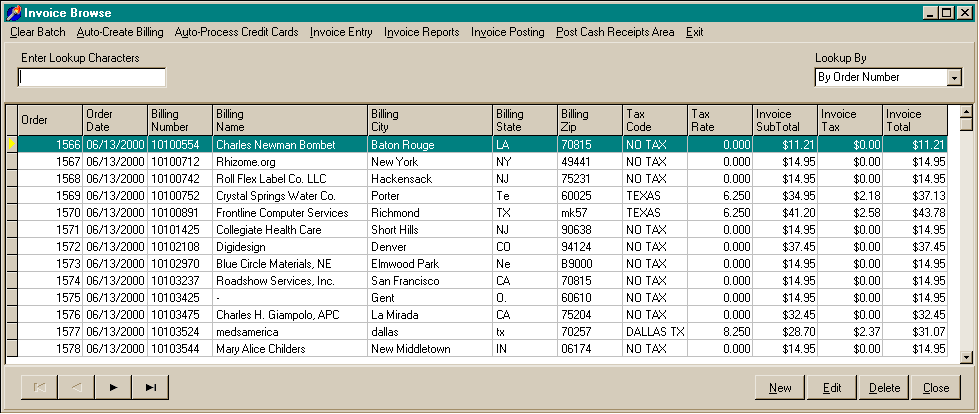
Customer
Invoice Entry Screen
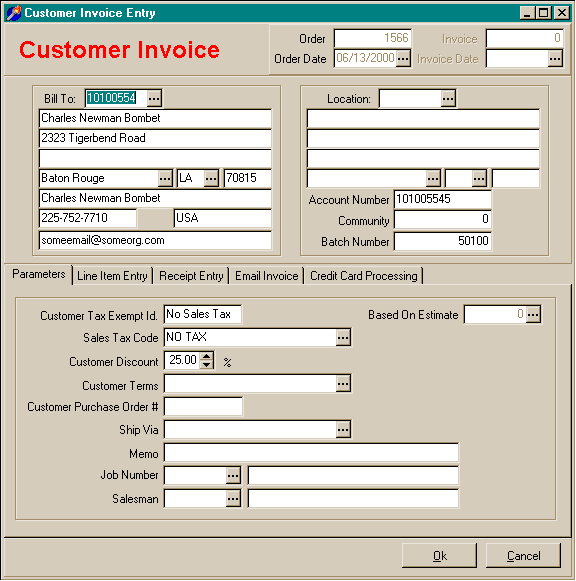
Customer
Invoice Entry Screen - Parameters
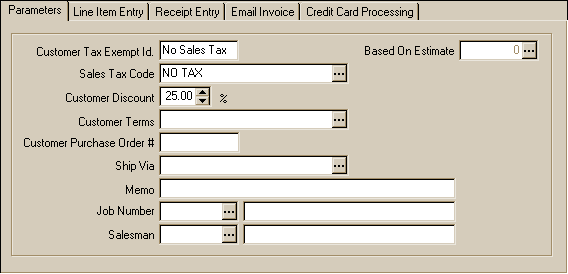
Customer
Invoice Entry Screen - Line Items
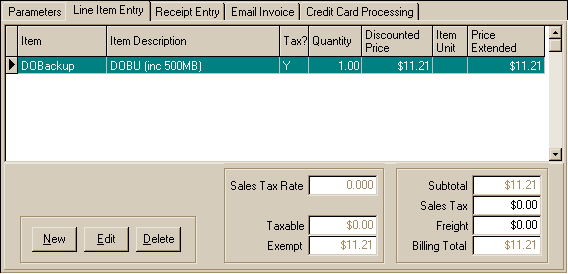
Customer
Invoice Entry Screen - Line Items - Detail
Customer
Invoice Entry Screen - Receipts
Customer
Invoice Entry Screen - Email Invoice
Customer
Invoice Entry Screen -Credit Card Information
Customer
Invoice Data
- Order Number: A unique customer order number for each order. This
number is automatically assigned from the company parameters file. If you
want your orders to start at another number, go to the Company Parameters
to change the next available Invoice number.
- Order Date: The customer work order entry date. This date is system
assigned.
- Invoice Number: The unique customer invoice number for this order.
The invoice number would come from a technician invoice pad if the work order
was invoiced in the field. Invoice numbers can be assigned at posting for
invoices not associated with an order written at the customer site.
- Invoice Date: The invoice date for this customer order.
- Customer Billing Information:
- Bill To: The customer number from the customer file. A customer number
must be entered before line items can be entered.
- Bill To Name
- Bill To Address Line 1
- Bill To Address Line 2
- Bill To City
- Bill To State
- Bill To Zip Code
- Bill To Contact Person
- Bill To Telephone Number
- Bill To E-mail address
- Customer Location:
- Location: The service location number from the customer file. A service
location number is not required. It is used for customers with multiple
service locations. A customer with only one location would not need multiple
service locations. The service location is not required. Information from
the billing information defaults to the service location when the billing
number is entered. Service location information can be changed without
requiring a service location id.
- Location Name
- Location Address Line 1
- Location Address Line 2
- Location City
- Location State
- Location Zip Code
- Customer Account Number
- Backup Community
- Billing Batch Number
- Based on Estimate: An order may be based on an accepted estimate
from the estimate history.
- Parameters:
- Customer Tax Exempt Id.: A tax exempt number from the customer,
if the work is tax exempt.
- Sales Tax Code: The sales tax code to properly tax the line items.
This can be associated with the zip code entries to perform an automatic
lookup during the auto-create invoice process.
- Customer Discount: The customer discount allowed on all items.
The discount may be changed at the line item level if not all items are
discounted.
- Customer Terms: The terms given to this customers. Terms are set
up in the terms file.
- Customer Purchase Order: The purchase order issued by the customer
for this work.
- Job Number: A job may be assigned to the Invoice to start the process
of maintaining associated Invoiced and actual costs based upon a job number.
Use job costing only when the job requires more than just one invoice and/or
the equipment is not listed on a per invoice basis. Costs are maintained
on an invoice to show profitability per invoice. Jobs are set up for work
performed over a longer period of time with costs needing to be tracked
before the work is completed.
- Ship Via: Shipper of choice if mailing or shipping the invoiced
items.
- Memo:A memo area to keep notes about this invoice, etc.
- Salesman: The salesman who is preparing this Invoice.
- Work Order Memo:
- Line Items:
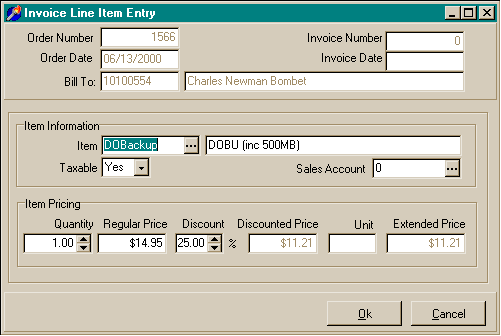
- Item Number: The inventory item number from the company inventory
file or vendor price list.
- Item Description: The item description as pulled from the inventory
file or vendor price list. The description may be changed.
- Taxable: Is this item taxable for sales tax?
- Unit: The sales unit of this item such as "Ea.", "Ft.",
"Box" etc.
- Quantity: The quantity to be sold to your client.
- Regular Price: The regular price before any discounts of this
item.
- Discount: The discount percentage for this line item. Originally
this is based on the customer discount on the Invoice, but it can be changed.
- Discounted Price: The price of the item after any discounts.
- Extended Price: The total price of the sale as calculated ( Quantity
times the Discounted Price ).
- Profit: The profit for this item as calculated ( Extended Price
minus Extended Cost ).
- Inventory Account: The general ledger account for showing the
inventory reduction of this item.
- Sales Account: The general ledger account for showing the sales
of this item.
- Cost Of Goods Account: The general ledger account for showing
the cost of this item.
- Totals:
- Billing Totals:
- Subtotal: The total of the line items extended price prior to sales
taxes.
- Sales Tax Rate: The sales tax rate based on the sales tax code entered.
- Sales Tax: The sales tax amount calculated by multiplying the sales
tax rate times the taxable sales amount.
- Freight: Enter the freight charged to the client.
- Billing Total: The total of subtotal, sales taxes, and freight.
- Taxable: The sales tax taxable amount of the sale.
- Exempt: The sales tax exempt amount of the sale.
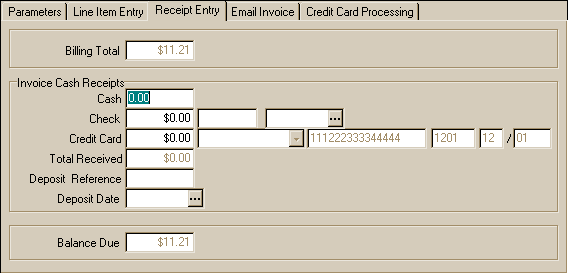
- Invoice Cash Receipts:
- Cash Amount: The cash amount received.
- Check Amount: The amount received on the customer check.
- Check Number: The check number of the customer check.
- Check Date: The check date of the customer check. You may also list
as the date received. A separate deposit date is allowed to account
for differences in the check date and your actual deposit date.
- Credit Card Amount: The amount received on the customer credit card.
- Credit Card Type: Is the credit card a Visa, MasterCard, American
Express, Discover, or Other type of credit card.
- Credit Card Number: The customer credit card number.
- Credit Card Expiration Date: The expiration date of the customer
credit card. Date is entered MM/YY.
- Total Received: The total of the cash amount, check amount, and
credit card amount.
- Deposit Reference: A reference number is not using the check number
for the deposit.
- Deposit Date: Date to be listed for the deposit document
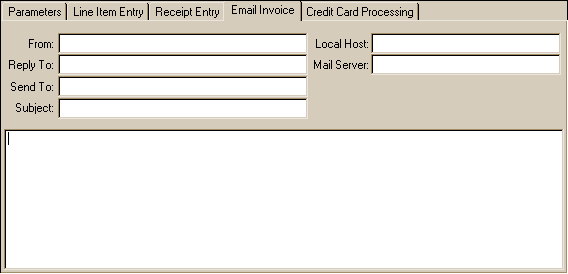
- Email Invoice
- From:
- Reply To:
- Send To:
- Subject:
- Local Host:
- Mail Server:
- Subject: Description of what the email contains.
- Text: The body text of the email invoice describing the invoice billing
information and line items.
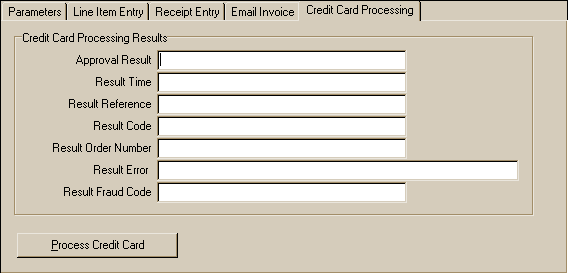
- Credit Card Information
- Approval Result
- Result Time
- Result Reference
- Result Code
- Result Order Number
- Result Error
- Result Fraud Code
- Process Credit Card Button: A credit card can be processed separate
from the auto-process credit cards procedure. This allows you to change
incorrect credit card information and re-run the card.

To create
invoices for all customers at one time:
- From the Document Entry menu, choose Customer Invoices.
- In the Customer Invoice Browse window, choose the Auto-Create Billing menu
option at the upper left.
- Enter the Batch Date and Batch Number to be used to pull the billing entries.
- Check the Use Stored Procedures option to use the server stored procedures
for creating the billing entries from the billing database.
- When you have completed your entries, choose the Create Entries button
to start the creation of an invoice for each customer for this billing cycle..
- Choose the Cancel button if you wish to cancel the process.
- As the billing files are processed, the current customer being processed
will be shown.
- When the process is completed, a message will appear "Invoice Creation
Completed.".
- Click on the Ok button to return to the Invoices Browse window.
To auto-process
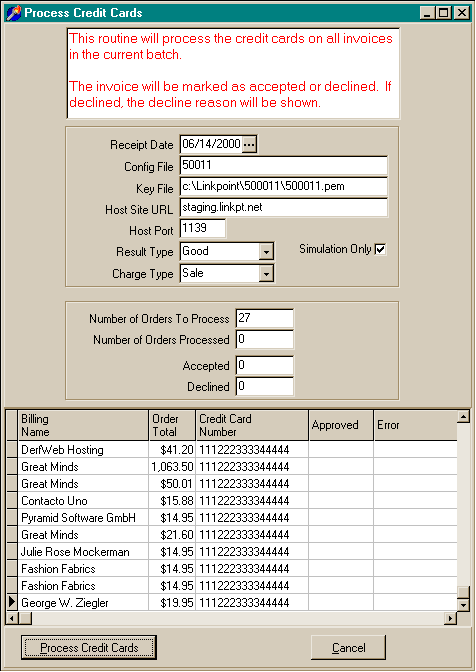
the credit card authorizations for all customers at one time:
- From the Document Entry menu, choose Customer Invoices.
- In the Customer Invoice Browse window, choose the Auto-Process Credit Cards
menu option at the upper left.
- Enter the Receipt Date to be used and check the credit card processing assignments
for correctness. Credit card authorizations may be tested by using a Result
Type of Good.
- When you have completed your entries, choose the Process Credit Cards button
to start the credit card authorization process for each invoice..
- Choose the Cancel button if you wish to cancel the process.
- As the each customer credit card is processed, the current customer being
processed will be shown with its result.
- When the process is completed, a message will appear "Credit Card Authorizations
Completed.".
- Click on the Ok button to return to the Invoices Browse window.
To
clear all Customer Invoices in this batch at one time:
- From the Document Entry menu, choose Customer Invoices.
- In the Customer Invoice Browse window, choose the Clear Batch menu option
at the upper left.
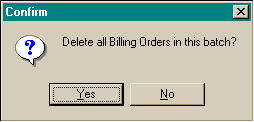
- Choose the Yes button to answer the question "Delete all invoices
in this batch?".
- All invoices will be deleted in the current batch and you will be returned
to the browse window.
To enter
a new Customer Invoice:
- From the Document Entry menu, choose Customer Invoices.
- In the Customer Invoice Browse window, choose the New button at the bottom
right.
- You do not enter a unique order number. It is automatically assigned to
the next order number from the company system file. If the order number has
been already used by the system, a caution window will appear.
- Fill in the remainder of the Customer Invoice screen with the information
appropriate for this service appointment or customer order.
- When you have completed your entries, choose the Ok button to save the
information.
- Choose the Cancel button if you wish to cancel the Customer Invoice entry.
To
edit a Customer Invoice:
- From the Document Entry menu, choose Customer Invoices.
- In the Customer Invoice Browse window, choose the Edit button at the bottom
right.
- Edit the Customer Invoice information as needed
- When you have completed your entries, choose the Ok button to save the
information.
- Choose the Cancel button if you wish to cancel any changes to the Customer
Invoice record.
To
delete a Customer Invoice:
- From the Document Entry menu, choose Customer Invoices.
- In the Customer Invoice Browse window, choose the Delete button at the
bottom right.
- Choose the Yes button to delete the Customer Invoice record.
- Choose the No button if you do not wish to delete the Customer Invoice
record.
To
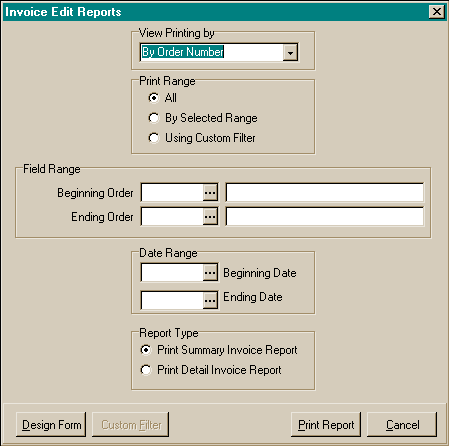
preview / print the Customer Invoice edit reports:
- From the Document Entry menu, choose Customer Invoices.
- In the Customer Invoice Browse window, choose the Customer Invoice Reports
menu option at the upper left.
- Choose the View By option for how the reports will be ordered. The options
are:
- By Order Number
- By Invoice Number
- By Technician
- Choose the print range of Customer Invoices. The options are:
- All
- By selected range. If by selected range, you may choose the beginning
and ending for the report, including the beginning and ending dates.
- Custom Filter
- Choose which report you wish to print. The options are:
- Summary Invoice Report
- Detailed Invoice Report
- Invoice Form
- Choose the Print Report button.
- The print preview window will appear. Use the page view buttons to size
the previewed report, and the page navigator buttons to scroll forward and
backward thru the report pages.
- To send to the printer, click on the Printer Speed Button at the top left
of the print preview screen.
- The printer dialog box will appear. Make any changes necessary. You may
change the number of copies, page range, and the designated printer.
- Choose the Ok button to send the report to the printer.
- Choose the Close button to end the print preview.

To
post the Customer Invoices:
- From the Document Entry menu, choose Customer Invoices.
- In the Customer Invoice Browse window, choose the Post Invoices menu option
at the upper left.
- Choose the Invoice Posting options you want. Options that are checked will
be performed during the posting operation. The options are:
- Print Invoice Summary Posting Report
- Print Detailed Posting Report
- Print Invoices
- Print Invoice Background
- Perform G/L Distribution
- Print G/L Distribution Report
- Assign Invoice Numbers
- Beginning Invoice Number
- Invoice Date
- Generate Email Invoices
- Send Email
- Test Email Processing Only
- Choose the Start Posting button.
- If the print posting reports options were checked, the print preview windows
will appear for each report.
- Use the page view buttons to size the previewed report, and the page
navigator buttons to scroll forward and backward thru the report pages.
- To send to the printer, click on the Printer Speed Button at the top
left of the print preview screen.
- The printer dialog box will appear. Make any changes necessary. You
may change the number of copies, page range, and the designated printer.
- Choose the Ok button to send the report to the printer.
- Choose the Close button to end the print preview.
- Click on the Ok button if the report was printed correctly. If the report
did not print out correctly, choose the No button to reprint the report,
or the Cancel button to cancel the posting operation.
- The Invoice posting operation will begin. The posting operation will:
- Update the invoice history files.
- Update the customer aging open receivables file.
- Update the customer document history file.
- Update the customer file.
- Update the job files.
- Create distribution for the general ledger distribution file.
- Create email invoice and store on invoice.
- Send email invoice to client.
- When the Invoice posting operation has completed, a message will appear
"Invoice Posting Completed.".
- Click on the Ok button to complete the posting operation and return to the
Customer Invoice Browse window.
To post
Customer Receipts from within the invoicing area:
Customer receipts do not update customer history immediately when generated
from the customer invoicing area. They are created in the customer receipts
area and are ready to be posted. They must be posted in order to update the
customer open invoices with their payment amounts. When posted, the receipts
are removed from the edit batch and added to and maintained in the customer
receipt history file. Posting also creates the general ledger distribution for
the customer receipts. Distributions are based on the general ledger accounts
set up in the company parameters setup screen.
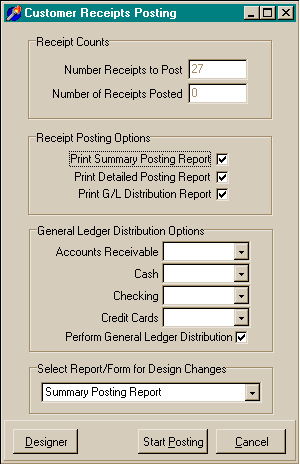
- From the Document Entry menu, choose Customer Receipts.
- In the Customer Receipt Browse window, choose the Post Receipts menu option
at the upper left.
- Choose the posting options you want. Options that are checked will be performed
during the posting operation. The options are:
- Print Summary Posting Report
- Print Detailed Posting Report
- Perform G/L Distribution
- Print G/L Distribution Report
- Choose the Start Posting button.
- If the print posting reports options were checked, the print preview windows
will appear.
- Use the page view buttons to size the previewed report, and the page
navigator buttons to scroll forward and backward thru the report pages.
- To send to the printer, click on the Printer Speed Button at the top
left of the print preview screen.
- The printer dialog box will appear. Make any changes necessary. You
may change the number of copies, page range, and the designated printer.
- Choose the Ok button to send the report to the printer.
- Choose the Close button to end the print preview.
- Click on the Ok button if the report was printed correctly. If the report
did not print out correctly, choose the No button to reprint the report,
or the Cancel button to cancel the posting operation.
- The posting operation will begin.
- When the posting operation has completed, a message will appear "Customer
Receipts Posting Completed.".
- Click on the Ok button to complete the posting operation and return to the
Customer Receipt Browse window.